
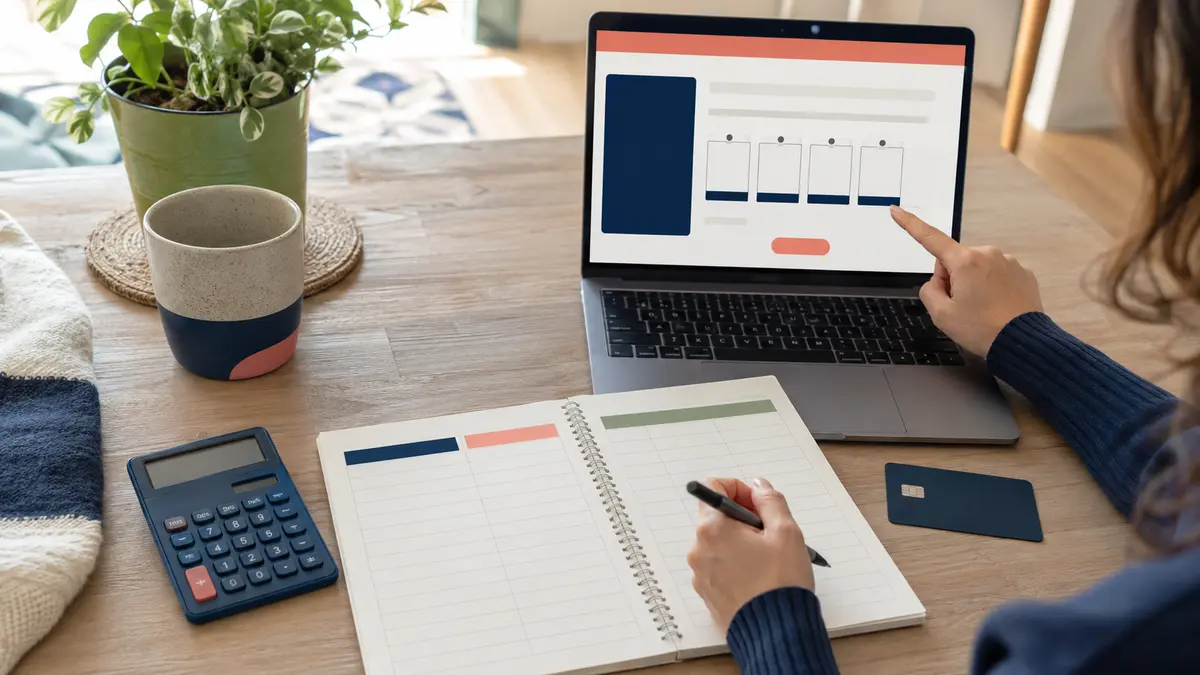
Buy now, pay later can make a $200 purchase look like four smaller payments. That can help with timing, but it does not make the item cheaper. The full $200 still belongs in your budget, and several small plans can overlap before you notice how much of the next paycheck is already committed.
This guide focuses on common pay-in-four products. Terms differ by provider and purchase, so read the agreement displayed at your checkout.
How pay-in-four usually works
Many BNPL plans split a retail purchase into four payments, often with the first due at checkout and the others collected automatically over several weeks. The CFPB describes the typical product as a four-payment retail loan that may carry no interest. That simple structure is part of its appeal.
Possible costs and consequences still include late fees, overdraft or insufficient-funds fees from the linked account, account restrictions, collection activity and difficulty coordinating a refund. Longer installment products may charge interest.
The five-question checkout test
1. Would I buy this at the full price today?
If installments are the only reason the item feels affordable, pause. A payment plan changes cash flow; it does not create a discount.
2. Is the money for all payments already in my plan?
Write every due date beside rent, utilities, groceries, debt payments and other BNPL plans. Do not assume a future paycheck has room.
3. What happens if the linked payment fails?
Read the provider's late-fee, retry, autopay and collections terms. Then check whether your bank may charge for an overdraft or returned payment.
4. How do returns work?
The retailer handles the merchandise while the BNPL provider handles the loan. Ask whether scheduled payments continue while a return is being processed, how refunds are credited and whom to contact if the amounts do not match.
5. Am I already paying other installment plans?
CFPB research published in 2025 found that, in its 2022 matched sample, more than three-fifths of BNPL borrowers held multiple simultaneous loans at some point and one-third borrowed from multiple providers. The lesson is not that every user is overextended; it is that separate apps can hide the combined obligation.
When BNPL can be manageable
A short installment plan may fit when the purchase is planned, the total already fits your budget, the terms have no interest or fees when paid on time, and automatic payments will not compete with essential bills. It can be a cash-flow tool, not a reason to increase the order.
Warning signs to stop
You need BNPL for routine groceries or bills because income is already short.
You do not know how many plans are active.
The first payment is affordable but later dates are not.
You are using one loan to preserve cash for another installment.
A discount requires you to choose financing you did not plan to use.
You are uncertain about interest, fees or the return process.
BNPL and coupon codes
Apply a valid coupon before financing so the loan reflects the lower checkout total. Then confirm that the promotion does not require a different payment method. Never add items simply to qualify for a financing promotion.
Create one installment dashboard
Use a note or spreadsheet with six columns: provider, retailer, original total, remaining balance, next due date and final due date. Update it immediately after each payment. The dashboard matters because providers do not show loans held elsewhere.
Run a missed-paycheck stress test
Before accepting the plan, imagine one expected deposit arrives a week late. Could the linked account still cover every installment and essential bill without an overdraft? If the answer is no, the plan has almost no margin for ordinary disruption.
Also test the combined total. Four separate $25 payments from four purchases can feel small on different checkout screens, but together they claim $100 from the same period. Write the total beside your other obligations before deciding.
Understand the return timing gap
A retailer may approve a return before the BNPL provider updates the loan. Until the provider confirms the adjustment, do not assume the next automatic payment has stopped. Keep the return receipt, watch both accounts and ask each company which step it controls.
If a partial return changes the financed amount, compare the revised balance with the retailer's refund. Small differences may come from nonrefundable shipping or excluded fees, but they should be explained rather than guessed.
What to do if a payment may be late
Contact the provider before the due date, review available options and keep records. Do not ignore notices. If the loan information or a refund appears wrong, use the provider's dispute process and preserve the order, return and payment documents.
Compare with paying by card or waiting
A credit card is not automatically cheaper; carrying a balance can create substantial interest. Paying with debit uses existing funds but offers different protections. Waiting and saving the purchase price may be the cleanest option when the item is not urgent.
The correct question is not “Can I make the first payment?” It is “Can I comfortably absorb the full purchase, on these dates, without weakening the rest of my budget?” If the answer is uncertain, the deal can wait.
This article provides general consumer information, not financial advice. Review the agreement for your specific plan.